Third Contact – Movie Review
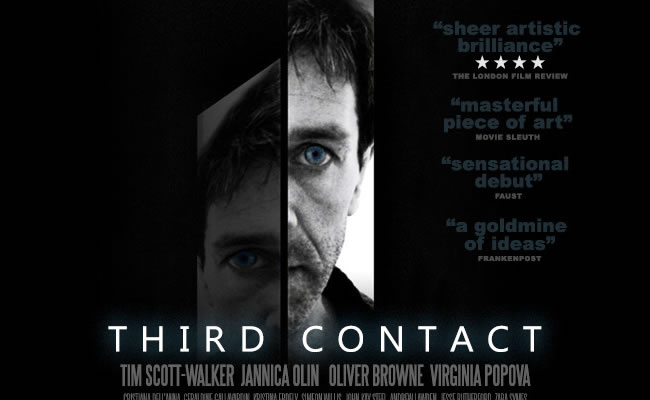
Simon Horrocks low budget Sci-fi Thriller, Third Contact (2011) went down a storm last night at London’s Waterloo IMAX cinema. Not only does Horrocks raise awareness about the issues surrounding mental health, he effectively demonstrates an intellectual insight into depression. Third Contact immediately breaks the traditional rules of Hollywood with the absence of an establishing shot. Instead the audience is transported into a deep conversation about quantum suicide between a therapist, Dr David Wright and his patient. Tim Scott- Walker’s convincing portrayal as the tormented therapist, Dr. Wright, allows the audience to connect with the disoriented character.
Horrocks filming techniques reminded me a lot of the pioneering filmmaker, Jean Luc-Godard. The low budget, the decision to edit the film in black and white and the use of hand held cameras, are just some of the reasons why. Similar to Godard, Horrocks purposefully created confusing and chaotic sequences that shrewdly leave the audiences guessing. In addition, Horrocks also utilises filmmaking in order to express and explore mental illness and the key ideas of existentialism such as, despair, angst and facticity. Godard frequently explored the norms and values of society, and the notions of death.
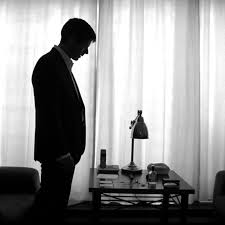
Shadows of Film Noir shape the tone of the entire piece with Horrocks bold decision to edit the film completely in black and white, which sharpens the visual storytelling and elevates the mise en scène. Diegetic and non-diegetic sound is used to heighten and shape the poetic mood of the narrative. The actors convey emotions and thought through the use of body language and facial expressions when there is little or no dialogue sequences. Lighting is employed to create a dramatic contrast between lightness and darkness.
Horrocks uses props throughout the film, not just as objects, but as extensions of character and scene. Fewer frames suggest the characters’ sense of disorientation or loss. This is exploited with the use of empty photograph frame that have been dotted around several interior scenes. The picture-less frames connotes the characters are lost, unknown, empty and unrecognisable figures. The sparse framing mirrors the characters’ fractured sense of self. Most importantly it is a direct reference to memories, which is another key theme that runs throughout the narrative. Photographs have the ability to preserve history. Not only does the physical evidence help to protect someone’s memories, photographs are a great method used to illustrate someone’s life story. Photos can evoke emotions from the protagonist concurrently they invite others to share your memory, even if they were not present at the time of the memory/occasion. Characters are unable to share each other’s memories in the Third Contact, with the majority of the photographs conspicuously absent. Moreover, the protagonists lack the physical evidence needed to prove their memories are real and not merely figments of their imagination.
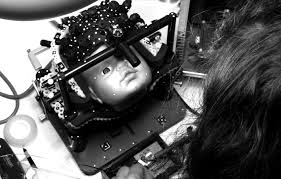
A regular patient of Dr. Wright is shown crafting a children’s doll at his workplace. As one life ends another life is being born, although the life is that of a doll this scene still exemplifies the concepts of life and death.
Suicide remains a central theme, the subject is present from the opening scenes up until the film’s conclusion. If someone is thinking about or attempting suicide, it’s a clear sign that something in their life is deeply wrong or they are in unmanageable pain – either mentally or physically. Why do people commit suicide? Does depression steer people into wanting them to take their own lives? Can one individual single handily encourage somebody else to end his or her own life? Or is it society as a whole that drives people into such disappear, that they are left feeling that they have little choice but to depart from this life? Suicide is a dark and complex subject to understand as each case is complex and personal to an individuals life. These are the questions that Horrocks raises throughout the film.
Third Contact kept me entertained for a whole ninety-nine minutes. A vast amount of time and research has evidently gone into writing this script, it is far from being over-scripted or predictable. The non-linear narrative captivates the audience as it forces them to work hard in order to unravel the plot. Although Third Contact can be compared to other films, it maintains its originality and manages to keep an edge over its predecessors.
As an aspiring scriptwriter and filmmaker I have studied Film, television and New Broadcasting Media for the last six years. I know how difficulties can arise during pre-production, production and post-production. I have nothing but admiration for Simon Horrocks as he successfully taught himself how to write scripts, film, over come budgets and how to edit the footage. Horrock’s determination and passion for this film has definitely paid off, Third Contact is stimulating and intriguing. Long gone are the days where Horrocks used to sell popcorn to movie goers, instead he will be selling cinema tickets for people to watch his own films, as he can now proudly call himself an independent film maker.
Without any hesitation, I would recommend Third Contact to others. It’s a striking, thought-provoking and memorable piece of cinema.
A full five stars from me.
Written By
Hannah Crawford